There is a perception that tarot is complicated, mysterious, maybe a little intimidating, and definitely something you needed years of study to understand. I recently sat down with my friend Angie Banicki, one of the most gifted intuitive tarot readers I know, and she showed me that the only tool you actually need to learn how to read tarot for beginners is the one you already have: your intuition.
By the time you finish reading this, you’ll know how to pull a card, how to do a simple three-card spread, and how to trust what you feel when you look at the imagery. You don’t need to memorize a single definition before you start.
What Is Tarot, Really?
Tarot is a tool, a deck of cards that acts as a bridge between your conscious mind and the deeper guidance that’s always available to you. If you’ve been watching Dear Guides for any amount of time, you already know you’re an intuitive being. You’re here because you’re tuned in. Tarot is one way to make those intuitive signals louder and clearer.
Angie describes it as a translator. Your higher self, your soul, your guides — they want to communicate with you. The cards can help you decode it.
I have my own tarot story that I love to tell. A week after my grandmother died, I was visiting a girlfriend and kept dodging her invitation to pull a card from her deck. I was busy, distracted, moving fast. She finally said, “I’ll pull one for you Gabby.” She turned over a card with an image of an elderly woman crossing a bridge. The text beneath it read: grandmother ensures safe crossing. My grandmother couldn’t get through to me because I was too busy, so she found another way. It was a beautiful example to me of how tarot can be a bridge between us and spirit.
How to Connect with a New Tarot Deck
When you open a new deck, take time with it before you do anything else. Angie has a beautiful practice for this that I tried live during our episode — and the difference in the cards was immediate and unmistakable.
Hold the deck and think about the deepest, purest love you have access to. For me it was my son, my cat Jimmy Blue, my husband. For Angie it’s her daughter or her little dog Betty White. Wherever you find that unconditional love in your life, pour it into the deck. Shuffle with that feeling running through you.
This isn’t about ritual for ritual’s sake. It’s about energy. The deck you’ve infused with your own love and intention responds differently to you than a deck that belongs to someone else. When I accidentally picked up Angie’s deck instead of mine, the card I pulled felt like her guidance — not mine. When I switched to my own deck, everything shifted. “This has all your energy,” Angie said. “It’s open and clear and ready to connect to you.”
I highly recommend Angie’s beautiful deck Explorer of the Soul
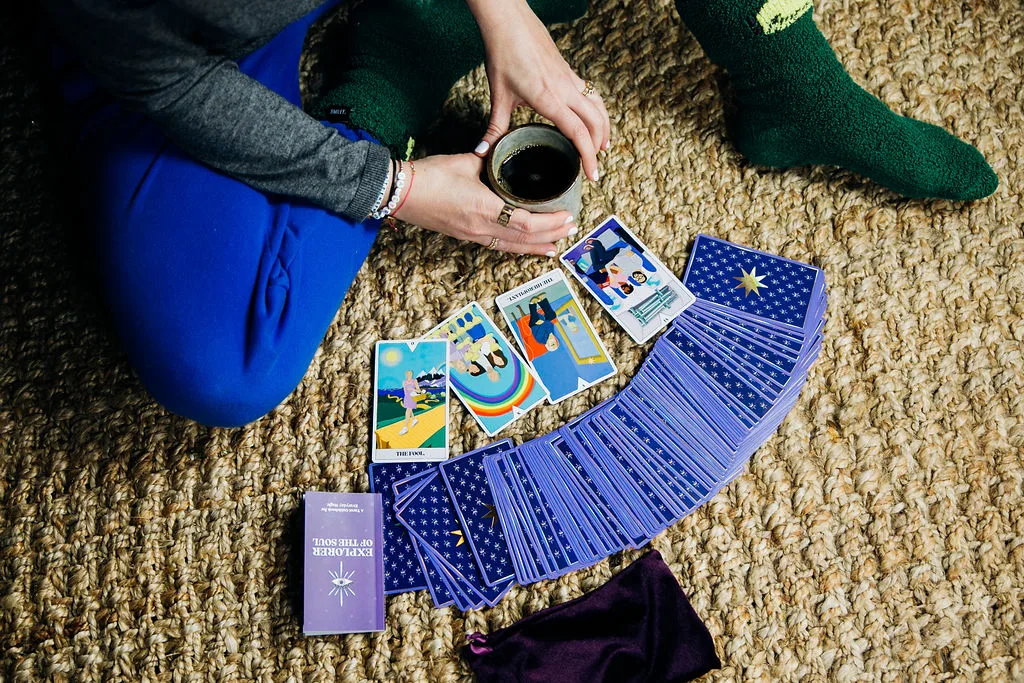
You can also use one of my affirmation card decks for you card readings.
How to Do a Daily Tarot Card Pull
The single best way to build an intuitive relationship with tarot is to pull one card every day. It’s simple, it’s low-pressure, and it becomes one of the most grounding practices you can have.
Step 1: Set Your Intention
Before you touch the deck, take a breath. You can say a simple prayer, or just ask: What do I need to know today? You’re not asking for predictions. You’re opening a channel.
Step 2: Shuffle and Pull with Your Non-Dominant Hand
Shuffle however feels natural. Angie spreads the cards out and draws with her non-dominant hand (the hand you don’t write with). The reason is simple: it bypasses overthinking. Your dominant hand is used to being in charge. Your non-dominant hand is more likely to just reach and feel, without the mind getting involved. Pull the card upward from the deck, then turn it over with the other hand to reveal whether it’s upright or reversed.
If a card flies out of your hand while you’re shuffling, that’s a jumper. Pick it up. It has something to say.
Step 3: Notice Before You Look Anything Up
This is the part most beginners skip and it’s the most important. Before you open the guidebook, sit with the card. What do you see in the imagery? What colors stand out? What’s the first word or feeling that arrives? Trust it. Write it down if you want to. Then, if you’d like more context, look it up.
Angie suggests a beautiful nighttime variation too: pull a card, look at it, then place it under your pillow before you sleep. This practice came from a story she heard while reading for guests in Europe, a tradition passed down from a mystic who served the Queen of Yugoslavia. The idea isn’t to analyze the card intellectually. It’s to let a deeper knowing settle in overnight, the way you just know someone after years of connection without being able to explain exactly why.
How to Do a Three-Card Tarot Spread
Once you’re comfortable with daily card pulls, try a three-card spread. This is where things get really powerful.
Basis, Present, and Future: A Better Frame Than Past, Present, Future
Most people have heard of a past-present-future spread. Angie taught me a slightly different framing that I find much more useful for beginners: basis, present, and potential future.
The first card isn’t about what’s already happened, it’s about the foundation, the energy that underlies everything you’re asking about right now. If the first card is the Magician, for example, the basis of your reading is about your tools, your magic, your resources. What you’re already working with.
The second card is where you are now.
The third card is the potential — not a fixed prediction, but a direction. It might show you a fear that needs to be addressed. It might show you what’s possible if you stay aligned. Either way, it’s information.
Here’s how to do it: shuffle with your intention set, spread the cards out with your dominant hand, then pull three cards face-down with your non-dominant hand before turning any of them over. Look at all three together before you interpret each one individually. The story they tell as a whole is often the most important message.
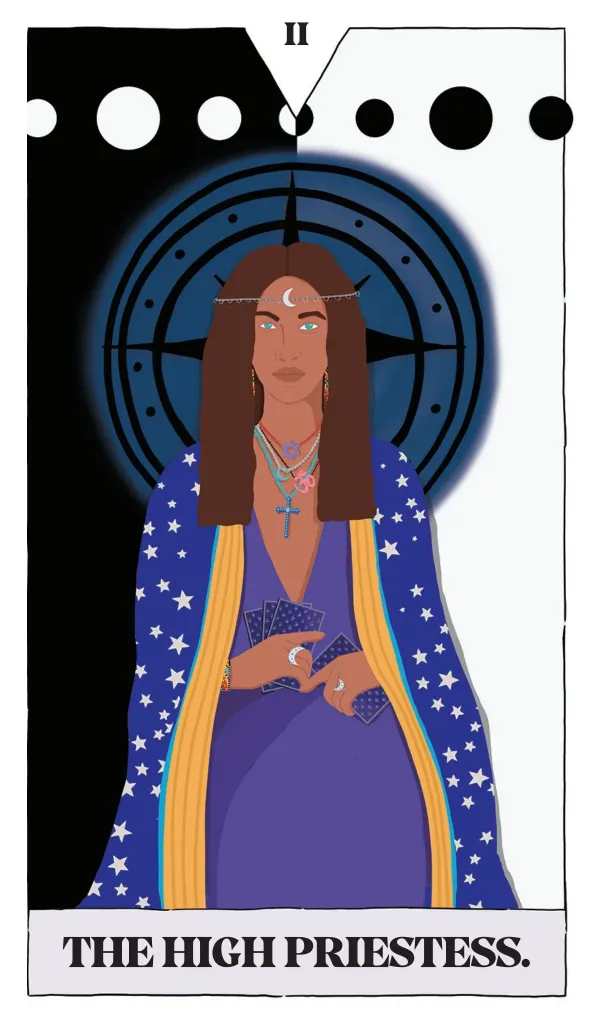
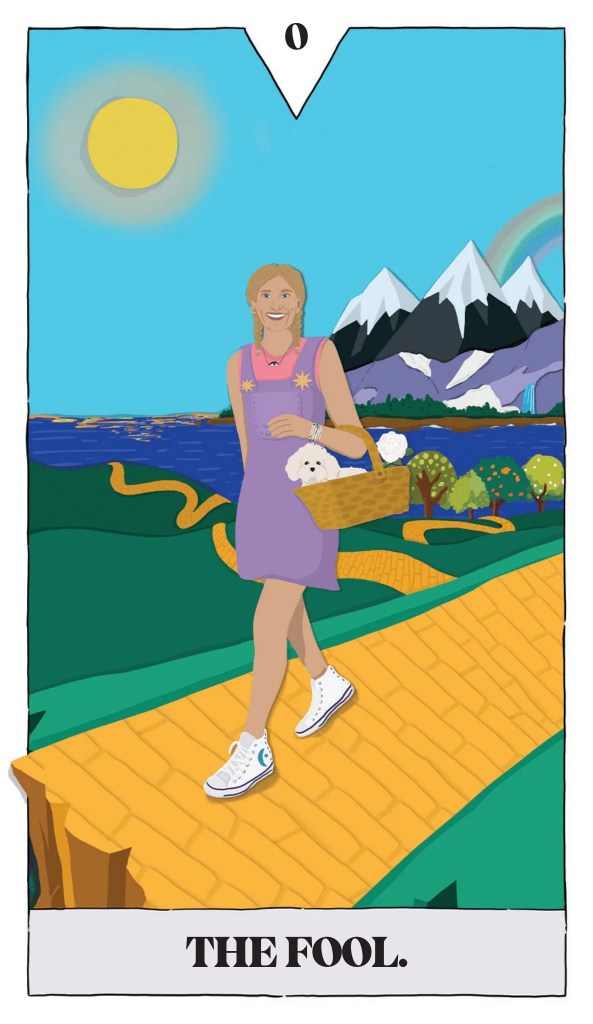
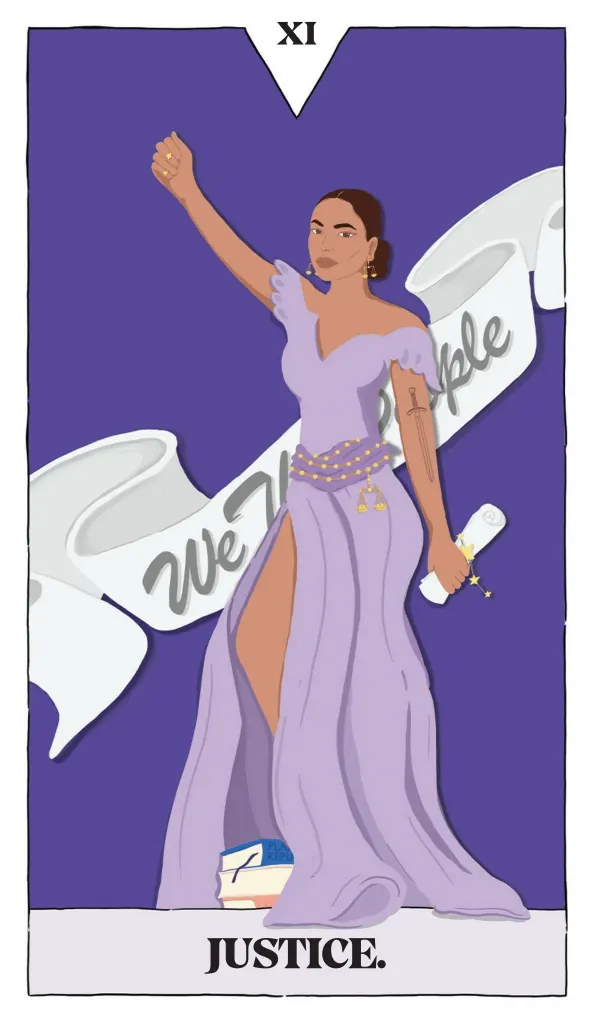
When Angie did this reading live during our episode, we pulled three Major Arcana cards in a row: the High Priestess, the Fool reversed, and Justice. She said that almost never happens. All three together told a story: deep intuitive knowing is already present, there’s no need to rush what’s coming, and the right relationships and opportunities are on their way. For this community, for all of us, that reading couldn’t have landed more perfectly.
What’s the best way to prepare before reading my own cards?
I love to meditate before I pull cards, it helps me ground and connect with my intuition. Following my guided Magnetic Energy meditation is a great way to do this.
Get my free Magnetic Energy Meditation
What Are Reversed Tarot Cards?
A reversed card is a card that comes out of the deck upside down. It doesn’t mean something bad is happening — it means the card’s energy is expressing differently. Sometimes a reversal points to a softer, more internalized version of the card’s upright meaning. Sometimes it’s closer to the opposite.
The key is to use both the guidebook and your intuition together. As Angie puts it, the guidebook gives you the frame, and your intuition fills in the picture. You’ll develop your own language with reversals the more you practice.
What Are Jumper Cards?
A jumper card is any card that falls or flies out of your deck while you’re shuffling. Treat it as an intentional message. The deck is saying: pay attention to this one. Pick it up, read it alongside any other cards you pull, and don’t ignore it because it wasn’t part of your planned spread.
Major Arcana vs. Minor Arcana: What You Need to Know
A standard tarot deck contains 78 cards divided into two groups.
Major Arcana — 22 cards representing the bigger archetypal themes of human experience: The Fool, The High Priestess, The Tower, The Star, Justice, and more. When Major Arcana cards come up in a reading, especially multiple ones, the message is significant. As Angie explained, these cards represent stages of development — the why behind what’s happening in your life, not just the what or the when. “When you get Major Arcana, it’s like the universe is saying: you can’t mess this up. This is happening.”
Minor Arcana — 56 cards divided into four suits (typically Cups, Wands, Swords, and Pentacles), representing the more day-to-day energies and situations of life. Each suit corresponds to different areas: Cups to feelings and relationships, Wands to passion and creativity, Swords to thought and communication, Pentacles to material matters and grounding.
You don’t need to memorize all of this before you start. Pick up your deck and go. The meanings will come through experience faster than they’ll come through studying.
What to Do If You Pull a Scary Card
This is the thing most tarot beginners are quietly afraid of, so I want to address it directly. Yes, some cards look unsettling, for example The Tower, with its image of a building on fire and figures falling.
Here’s what Angie taught me about it: the Tower is card number 16 in the Major Arcana. The card that follows it is the Star — a card of hope, renewal, and light after disruption. In the sequence of the Major Arcana, the Tower comes right before the Star. That context matters. The Tower isn’t destruction for destruction’s sake. It’s life cracking open what has been stuck, clearing the way for what’s next.
When you pull a card that unsettles you, pull another. Ask the deck for more context. If this is my Tower day, what else do I need to know? Let the additional card offer you support and direction. And try to sit with the card rather than dismiss it. The harder cards almost always carry the most important messages.
Angie’s Five Tips for Intuitive Tarot Reading
After our session together, I asked Angie to sum up her top guidance for anyone picking up a deck for the first time. Here’s what she shared:
- Start with one card a day. It’s the most powerful way to learn, and it’s genuinely fun. Pull a card each morning, feel into it, and watch how it plays out across your day.
- Feel before you look. Always sit with the imagery first. What do you notice? What word or feeling arises? Trust it before you reach for the guidebook.
- Use your non-dominant hand to pull. It bypasses overthinking and keeps you in intuitive flow rather than analytical mode.
- Set your intention before every reading. A simple prayer or question is enough. What do I need to know right now? is always a good place to start.
- Don’t ask yes or no questions. Instead of “Will this happen?” try “What do I need to know about this?” Open-ended questions get richer answers. You already know more than you think — the cards help you trust that knowing.
Frequently Asked Questions About Reading Tarot
What is tarot and how does it work? Tarot is a deck of cards used as a tool to access your intuition and receive spiritual guidance. Each card carries symbolic imagery that your intuition responds to. Rather than predicting the future, tarot acts as a bridge between your conscious mind and your deeper knowing.
Can beginners read their own tarot cards? Yes. You don’t need to memorize every card meaning before you start. Begin by noticing what you feel when you look at a card — the imagery, colors, and symbols will speak to your intuition. Over time, you can layer in guidebook meanings alongside what you sense.
What does it mean when a tarot card comes out reversed? A reversed card carries a modified version of its upright meaning — sometimes a softer expression of the card’s energy, sometimes its opposite. Many decks include reversed meanings in their guidebooks. Trust your intuition about which interpretation resonates.
What is a jumper card in tarot? A jumper card is a card that falls or flies out of the deck while you’re shuffling. Treat it as a message — it wants your attention. Pick it up and read it alongside the cards you intentionally pulled.
What is the difference between Major Arcana and Minor Arcana? The Major Arcana is a set of 22 cards representing the bigger themes and stages of development in life. The Minor Arcana covers everyday situations and energies, divided into four suits. When you pull multiple Major Arcana cards in a spread, the message is especially significant.
Should you ask yes or no questions in tarot? No. Tarot works best when you ask open-ended questions that invite guidance rather than a binary answer. Instead of “Will this happen?” try “What do I need to know about this situation?” The cards offer wisdom and perspective, not decisions.
How do you start a daily tarot practice? Pull one card each morning. Before looking it up, spend a moment with the imagery — notice what you feel, what stands out, what word comes to mind. Then check the guidebook if you’d like more. At the end of the day, see how the card’s energy showed up. Over time, this practice deepens your intuitive connection with the deck.
Before Your Next Reading
If this episode sparked something in you, I’d love to support you in going deeper. Grab Angie’s Explorer of the Soul deck or one of my affirmation decks and try the daily card pull for 30 days. Before each reading, you might also try my free magnetic energy meditation to get grounded and open before you pull.
Gabrielle Bernstein is a #1 New York Times bestselling author, international speaker, and spiritual teacher. She is the host of the Dear Guides podcast and YouTube series, and the creator of the Gabby Coaching Membership. Gabby has been featured on Oprah’s SuperSoul Sunday, the Today show, and in the New York Times. Learn more at gabbybernstein.com.